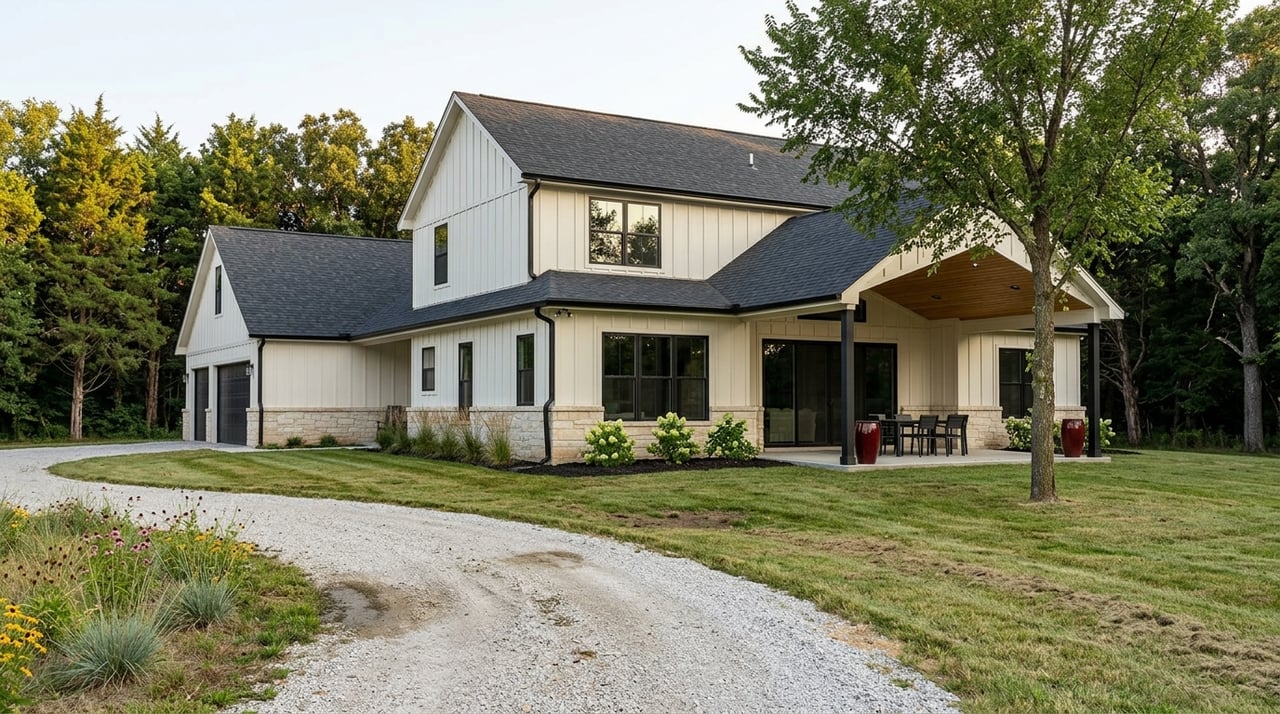
Dreaming about more land near Lawrence? Acreage living in Douglas County can give you more privacy, more elbow room, and space for plans that may not fit on a typical city lot. But buying rural property is not as simple as counting acres, and the details can affect what you can build, how the property functions, and what it may cost to maintain. This guide walks you through what to check before you buy so you can move forward with confidence. Let’s dive in.
Why Buyers Look to Douglas County
Douglas County covers 455.77 square miles and includes Baldwin City, Eudora, Lawrence, and Lecompton. Lawrence is about 45 minutes west of Kansas City and 30 minutes east of Topeka, which makes the area appealing if you want more land while staying connected to a broader commuter network.
The county’s planning approach also helps explain the appeal. Douglas County is working to balance open space and wildlife habitat with housing, jobs, recreation, and services for both urban and nonurban lifestyles. For you as a buyer, that means acreage living here is tied closely to preserving rural character.
What Acreage Living Often Means Here
When people picture acreage homes near Lawrence, they often imagine a farmhouse, custom home, or detached home with accessory buildings. In many parts of unincorporated Douglas County, that lines up with how land is regulated, especially in areas intended to discourage urban-style development.
In the county’s Large Rural Residential district, density generally ranges from about one dwelling per 34.9 acres to one dwelling per 10 acres. The district allows one principal single-family dwelling or one group home per lot, and the county FAQ states that only one residence is allowed per land tract, although some additional housing options such as ADUs are now allowed under the code.
Lot size is not just a simple zoning label. The county says it can also depend on site analysis, nearby land uses, health department requirements, natural features, water supply, septic-soil suitability, and the county master plan. That is one reason two parcels with similar acreage can have very different building potential.
Minimum Lot Rules to Know
If a property will use an individual well and septic system, the minimum lot area is 2 acres. If the property is served by central water, the minimum lot area is 1 acre.
Detached accessory dwelling units, or ADUs, are allowed one per lot under certain conditions. The code sets a 1-acre minimum for a detached ADU on central water and a 2-acre minimum on an individual well. If your goal includes extra living space for guests or extended household use, this is a key question to verify early.
For animals, lot size matters too. The county’s rural site plan notes that 2.3 acres is the minimum lot size needed to support animals. If horses or livestock are part of your plan, you will want to confirm not only acreage, but also how the usable land, fencing, drainage, and septic layout work together.
Zoning and Buildability Come First
One of the biggest mistakes acreage buyers make is assuming that land is buildable just because it looks open or because nearby parcels have homes on them. In Douglas County, buildability can change based on lot history and site conditions.
The county recommends contacting Zoning & Codes directly with land-buildability questions for unincorporated Douglas County. That matters because zoning rules for property inside city limits are handled by the city, not the county.
If you are comparing a few rural or semi-rural options, ask the same questions on each parcel:
- Is the property in unincorporated Douglas County or inside city limits?
- What zoning district applies?
- Is the parcel considered buildable today?
- What setbacks or site limits affect placement of a home or outbuildings?
- Are ADUs or accessory structures allowed on this specific lot?
- Are there any easements or other site constraints that reduce usable space?
Water, Septic, and Utility Checks
Utilities can shape your ownership experience as much as the home itself. Before you buy, confirm whether the property is served by city water and sewer, a rural water district, or a private well.
Douglas County inspection requirements call for either final well-water approval from the health department or a final water-meter inspection from a rural water district. If wastewater utility is unavailable, septic systems may be permitted countywide, and the Douglas County Health Department permits the installation, repair, and use of these systems across the county.
If the property has a private well, there is a helpful local resource. Lawrence-Douglas County Public Health offers free, voluntary well-water testing for property owners across Douglas County, screening for nitrates, coliform bacteria, and E. coli.
Septic due diligence is especially important on acreage homes. The county requires a septic use permit when a property is sold or changes ownership, so it makes sense to pull septic documentation early in the process.
Septic Maintenance Matters More Than Many Buyers Expect
A septic system is easy to overlook during a showing, but it can become one of the most important parts of your inspection and long-term maintenance plan. Douglas County recommends septic tanks be inspected every four years and pumped when scum and sludge exceed 25 percent of tank volume.
The county also says grass should cover the lateral field. Buildings, driveways, parking areas, vehicles, and livestock should be kept off or away from the septic system because compaction and extra loading can lead to premature failure.
If animals are part of your plan, this becomes even more important. County guidance warns that livestock can damage a drainfield if they are allowed on it, so your layout needs to protect both your land use and your wastewater system.
Road Access and Driveway Questions
A long driveway and extra privacy can sound ideal, but access has practical costs. Douglas County says each building lot must have its own driveway and meet road-frontage standards.
Road maintenance also depends on the type of road. Kansas Department of Transportation maintains state and federal highways, while Douglas County Public Works maintains county roads. That distinction can matter when you think about access, maintenance expectations, and day-to-day driving conditions.
If you plan to build or improve a site, the county’s building-permit guidance says owners or permit holders must verify the location of all utilities and easements before excavation or construction. That is a smart question to raise before closing, not after.
Surveys, Boundaries, and Parcel Maps
On acreage properties, boundaries are not always as obvious as they seem from the road. Douglas County GIS notes that the parcel viewer shows taxable land boundaries from the appraiser’s perspective, not survey lines.
That means a map screenshot should never be treated as a final answer for boundary questions. The county’s land-survey records office keeps recorded surveys for review, which can help you understand what has already been documented.
This is especially useful if you are thinking about fencing, outbuildings, driveways, or future improvements. On larger parcels, a small misunderstanding about boundaries can create expensive problems later.
Agricultural Use Can Change the Rules
If a parcel is being used exclusively for agriculture, the rules may differ from standard residential expectations. Douglas County says agricultural uses are exempt from county zoning regulations.
The county also says agricultural structures can be exempt from building permits if ag-exemption certification requirements are met. If you are considering barns, sheds, or working-land improvements, it is worth confirming whether the property falls into a standard residential path or an agricultural-use framework.
This is one more reason acreage buying is so parcel-specific. Two properties with similar size may not operate under the same practical rules if their current and intended uses differ.
A Simple Acreage Buyer Checklist
Before you move forward on an acreage property near Lawrence, make sure you have answers to these core questions:
- Confirm whether the property is inside city limits or in unincorporated Douglas County
- Verify zoning, permitted uses, and buildability
- Confirm the water source: city, rural water district, or private well
- Review septic records and ask about the required septic use permit during transfer
- Check driveway access and road-frontage requirements
- Review easements and utility locations
- Ask whether animals, outbuildings, or an ADU are allowed
- Review recorded surveys instead of relying only on parcel-viewer lines
- Understand whether agricultural-use rules apply
The Bottom Line on Acreage Near Lawrence
Acreage living in Douglas County can be a great fit if you want more privacy, room to spread out, and flexibility for outdoor living or permitted outbuildings. The area’s location near Lawrence, Kansas City, and Topeka adds convenience, but the real value of a rural property depends on the details of that specific parcel.
The smartest approach is to treat every acreage purchase as a verification project. When you check zoning, utilities, septic, access, boundaries, and allowed uses early, you put yourself in a much stronger position to choose the right property.
If you want guidance as you compare homes and land near Lawrence or across the greater Kansas region, the johns family team is here to help you make a confident move with clear, practical advice.
FAQs
What does acreage living in Douglas County usually look like?
- In unincorporated Douglas County, acreage living often centers on single-family homes on larger lots, with rules that may allow certain accessory buildings, ADUs, agriculture, or animals depending on zoning, lot size, and site conditions.
What is the minimum lot size for a home in Douglas County?
- The county code says the minimum lot area is 2 acres for lots served by an individual well and septic system, and 1 acre for lots served by central water.
Can you have animals on acreage property in Douglas County?
- The county’s rural site plan notes that 2.3 acres is the minimum lot size needed to support animals, and buyers should also account for septic-system protection and other site requirements.
What should you verify before buying vacant land near Lawrence?
- You should confirm buildability, zoning, water source, septic suitability and records, driveway access, road frontage, easements, boundaries, and whether your intended use is allowed on that specific parcel.
Are ADUs allowed on acreage property in Douglas County?
- Douglas County allows one detached ADU per lot under certain conditions, with a 1-acre minimum on central water and a 2-acre minimum on an individual well.
How do septic rules affect Douglas County home purchases?
- Septic systems matter because the county requires a septic use permit when a property is sold or changes ownership, and buyers should review system records, maintenance history, and site layout early in the process.